TL;DR
B2B manufacturing companies that build a strong, consistent brand identity grow faster, retain clients longer, and command better margins. This article covers why brand centricity matters in manufacturing, how to align marketing channels by sector, the critical role of digital presence and employee branding, and a missed opportunity most manufacturers overlook: the umbrella brand vs. house of brands strategy. Includes actionable frameworks, sector matrices, and FAQs.
The Factory That Nobody Knows
Picture this. You run a manufacturing business that has been operating for 25 years. Your machines are modern, your quality certifications are in order, your delivery track record is impeccable, and your repeat clients swear by you. And yet — your sales team is perpetually chasing new leads, your pipeline feels thinner than it should, and every new prospect requires a long, painstaking trust-building exercise before they’ll sign.
Sound familiar?
This is the invisible manufacturer’s dilemma — and it is more common than most business owners in the B2B manufacturing space want to admit. The solution, more often than not, is not a better product or a cheaper price. It is a stronger, more deliberately built brand.
Brand-centric marketing is not a luxury reserved for consumer companies or big-budget corporations. For B2B manufacturers, it is arguably the most cost-efficient, long-term strategy available to grow revenue, reduce sales friction, attract talent, and build sustainable competitive advantage.
This article unpacks exactly why — and how — to make that shift.

Table of Contents
What Is a Brand, Really? (And Why It Matters More in B2B Than You Think)
Let’s strip away the jargon. A brand is not your logo. It is not your tagline or the colour palette on your brochure. A brand is the sum total of what people believe about your business — the associations, the feelings, the judgements that form in the mind of a buyer, a partner, a supplier, or a potential employee the moment they encounter your company.
“Your brand is what other people say about you when you’re not in the room.” — Jeff Bezos
In B2B manufacturing, this has a very specific implication. Your brand is what a procurement manager at a large OEM thinks of when your company name comes up in a vendor meeting. It is what an engineer remembers when they are specifying components for a new product. It is the gut feeling that says ‘these people are reliable’ or ‘I’ve seen their work and it’s solid’ or, unfortunately for many, ‘who are they again?’
Everything your business communicates — your certifications, your leadership team’s credentials, your client case studies, your social media presence, your trade show booth, your sales team’s language — eventually folds into this one perception. That perception is your brand. And it either works for you, or it is silently working against you.
The B2B Manufacturing Landscape: Why Credibility Is Currency
B2B manufacturing is a relationship-driven, trust-intensive business. Whether you are an OEM supplying sub-assemblies to a global automotive brand, a contract manufacturer producing wellness supplements for a retail chain, or a specialty chemical company serving the pharma industry, the dynamics are consistent: buying cycles are long, the stakes are high, and trust is the true currency.
The table below maps out key manufacturer types in the B2B space and illustrates how brand-based positioning creates measurable business advantages:
| Manufacturer Type | Examples | Brand Challenge | Brand Advantage |
| OEM (Original Equipment Manufacturer) | Auto parts, electronics components | Invisibility — brand buried under client’s label | Trust & specification pull — engineers spec you in |
| Contract Manufacturer | Pharma CMOs, FMCG co-packers | Perceived as commodity; price wars | Credibility signals justify premium; attract top clients |
| Specialty / Niche Manufacturer | Technical textiles, specialty chemicals | Narrow awareness outside core segment | Authority positioning drives referrals and inbound |
| Industrial / Capital Goods Maker | Machinery, automation equipment | Long sales cycles; multiple decision-makers | Brand reduces perceived risk; accelerates consensus |
The insight here is consistent: regardless of the type of manufacturing business, brand clarity and brand credibility are not soft extras — they are structural business assets that directly affect your ability to win, keep, and grow accounts.
The Architecture of Credibility: What Really Builds a Manufacturing Brand
Credibility in B2B manufacturing is not manufactured through advertising alone. It is built through a layered stack of tangible and intangible elements that, when communicated consistently and cohesively, form the brand’s structural foundation.
Certifications and Compliance
ISO 9001, ISO 14001, GMP, REACH compliance, BIS certifications, OEKO-TEX, Halal/Kosher — each of these is a trust signal. When prominently communicated across all brand touchpoints (website, proposals, trade collateral), they reduce procurement risk perception and qualify your business faster in vendor evaluation processes.

Leadership Pedigree and Domain Expertise
The people behind a manufacturing company carry enormous brand weight. Founder background, decades of domain expertise, technical leadership, industry body participation, and thought leadership contributions — all of these add to the brand equity that the business trades on. Yet most SME manufacturers barely mention these on their websites or in their marketing collateral.
This is a significant missed opportunity. Senior procurement and sourcing professionals do background checks. They read about the management team. They look for signals that the people running the business understand the industry at a deep level. These signals form part of the brand story.
Industry Relevance and Client Success
The industries you serve, the problems you have solved, and the outcomes you have helped clients achieve — these are the empirical proof points of your brand’s relevance. A chemicals manufacturer that can point to five documented case studies across pharma, agri, and food sectors is not just a supplier; they are a proven domain partner.
For legacy B2B manufacturers particularly — especially those in the SME space — this is the critical mindset shift that needs to happen: brand is not decorative design. It is the coherent expression of your business’s substance, story, and service capability. It is the bridge between what you know and what your market knows about you.
The Partner Success Lens
One of the most underused brand narratives in B2B manufacturing is this: ‘When our clients win, we win.’ Your brand’s ultimate proof point is not what you claim about yourself — it is the measurable success of the businesses you supply to. Weaving this perspective into your brand communication transforms you from a vendor into a strategic partner — a position that commands loyalty, referrals, and pricing power.
Marketing Channels by Sector: A Brand-Aligned Framework
Not all marketing channels deliver equal value for all manufacturing sectors. The matrix below provides a practical reference for aligning brand and marketing strategies by sector — helping B2B manufacturers prioritise their investments effectively:
| Sector | Brand Comm. | PR / Corp. Comm. | SEO | Social Media | Trade / Events | Content Marketing |
| Textiles & Fabrics | Sustainability story, quality heritage | Industry awards, trade media features | Product specs, certifications (OEKO-TEX) | LinkedIn, visual platforms (Pinterest, Instagram) | Heimtextil, ITMA | Technical guides, trend reports |
| Engineering & Metals | Precision, reliability, tolerances | Case studies, technical whitepapers | CAD files, spec sheets, long-tail keywords | LinkedIn, YouTube (machine demos) | IMTEX, Hannover Messe | How-to videos, engineering blogs |
| Specialty Chemicals | Safety, compliance, innovation | Regulatory comms, research citations | SDS pages, REACH/MSDS content | LinkedIn, niche forums (ChemistryViews) | Chemspec, CPHI | Application notes, formulation tips |
| Industrial Machinery | Uptime, ROI, local service network | Customer success stories, analyst coverage | Machine category + application keywords | LinkedIn, YouTube, Twitter/X (industry) | EMO, ProMat, local expos | ROI calculators, maintenance guides |
| Wellness & Health Products | Purity, clinical backing, ethics | Certifications (GMP, ISO), expert opinions | Ingredient-level SEO, health benefit clusters | LinkedIn (B2B), Instagram (B2C crossover) | Vitafoods, CPhI Worldwide | Formulation research, white-label guides |
The consistent thread across all sectors: brand communication must anchor every channel. Without a clear brand narrative, even well-executed SEO or social media activity becomes noise — engaging no one and building nothing.
Digital-First Outreach: Your Brand in the Online Arena
Here is a reality check for every B2B manufacturer reading this: your prospective buyer has almost certainly visited your website before they ever spoke to your sales team. In many cases, they have already formed an opinion — one way or another.
In the digital-first world we now operate in, your online presence is not a sales support tool. It is the first — and sometimes only — interaction a prospect will have with your brand. This makes digital brand strategy not a marketing function but a business-critical investment.
Website as Brand HQ: UI/UX That Speaks Your Industry’s Language
A B2B manufacturing website needs to do several things simultaneously: establish credibility instantly, communicate technical competence without overwhelming the visitor, guide the right buyer persona to the right information, and inspire enough trust that the visitor takes a next step.
This means the UI/UX must be:
- Sector-aligned: The visual vocabulary (imagery, typography, colour, layout) should feel native to your industry. A pharma-grade manufacturer should look clinical and precise; a technical textiles company should feel modern and material-rich.
- Content-structured: Navigation should be organised around buyer problems and applications, not internal company departments.
- Technically credible: Certifications, white papers, case studies, and specification sheets should be easily accessible — not buried three clicks deep.
- Demographically calibrated: If your primary buyer is a 45-year-old procurement director, your website should not read like it was designed for a 22-year-old app user. Tone, depth, and visual weight matter.
Content Marketing: Native, Platform, and Marketplace
Content marketing for B2B manufacturers works across three distinct surfaces, and each requires a different approach:
Native Content (Website and Blog)
This is your domain authority engine. Long-form articles, application notes, technical guides, and manufacturing process explainers not only drive SEO rankings but signal deep subject matter expertise to both human readers and AI search tools like Perplexity, ChatGPT, and Google’s AI Overviews.
Social Media Platform Content
LinkedIn is the non-negotiable platform for B2B manufacturing brands. Short-form insights from leadership, client success snippets, manufacturing process visuals, and industry commentary — all consistently branded — build the social proof layer that warms up prospects before the first conversation.
Marketplace and Industry Platform Content
IndiaMART, TradeIndia, Alibaba, ThomasNet, and sector-specific marketplaces serve a very specific discovery function. Keeping these profiles well-maintained, brand-consistent, and content-rich ensures your brand quality is reflected even in third-party environments.
Brand Centricity Offline: The Employee-Brand Connection Most Companies Miss
Here is a dimension of brand strategy that the vast majority of B2B manufacturing companies — particularly those with predominantly offline operations — entirely overlook: your people are your brand, just as much as your products.

This is not a new idea. Global professional services firms, top-tier engineering companies, and leading FMCG brands have known this for decades. But for many manufacturing SMEs, ’employer branding’ sounds like a large-company luxury. It is not.
Beyond the Branded T-Shirt
Employee branding in its surface form — branded uniforms, mugs, factory signage, office interiors — is a start, not a destination. The real power of employer branding lies in something less visible but far more impactful: the way your people think, speak, and behave when they interact with clients, prospects, and the market.
Professional services firms invest heavily in training their client-facing teams to communicate with the same voice, values, and behavioural standards that define the brand. A client interaction with a field service engineer, an account manager, or a logistics coordinator is a brand touchpoint. If that touchpoint is inconsistent, poorly handled, or misaligned with what your marketing says — the brand suffers.
L&D as a Brand Investment
Training and Learning & Development (L&D) programmes are brand investments when framed correctly. When your sales teams are trained to articulate your brand’s value proposition with clarity and confidence, they close faster. When your service teams understand the brand’s commitment to quality and responsiveness, client retention improves. When your leadership team is coached to represent the brand publicly — in conferences, media, and industry bodies — the brand’s presence and authority compound over time.
Every interaction your people have in the marketplace is a brand moment. Treat it as such.
The business metrics that follow from this approach — improved client acquisition rates, higher retention, stronger referral networks, better talent attraction — are not soft outcomes. They directly impact revenue growth and bottomline sustainability. This needs to be viewed as a business investment with measurable ROI, not a cost line item.
The Missed Opportunity: Umbrella Brand vs. House of Brands in B2B Manufacturing
Here is a scenario that plays out quietly in many B2B manufacturing businesses, at considerable cost: a company with deep competency in, say, specialty coatings is approached by a prospect from the pharmaceutical packaging sector. The prospect visits the website, sees case studies only from the automotive and industrial space, and moves on — concluding that this manufacturer probably doesn’t understand pharma requirements.
The manufacturer does understand pharma requirements. They just never thought to say so.
This is the brand use-case gap — and it is one of the most significant missed revenue opportunities in B2B manufacturing.
The Two Strategic Choices
When a manufacturing business serves multiple verticals or has distinct product lines addressing different buyer categories, there are two broad brand architecture options:
The Umbrella Brand Model
A single master brand covers all verticals. Sub-branding (product lines, divisions, verticals) lives under the parent. The parent brand’s credibility flows across all applications. This works best when the common thread — quality, technology, service standard — is genuinely consistent across all verticals.
The House of Brands Model
Distinct sub-brands operate with relative independence under a holding brand. Each sub-brand is optimised for its target segment, with dedicated messaging, visual identity, and content strategy. This works best when the target segments are very different in their expectations, decision-making criteria, or brand values.
| Scenario | Umbrella Brand Approach | House of Brands Approach |
| Chemical company serving pharma + agri | One master brand with pharma and agri verticals under it — cross-credibility, single reputation pool | Separate brand identity per vertical — eliminates cross-contamination, tailored messaging |
| Textile mill serving fashion + industrial | Unified brand communicates breadth and versatility | Distinct sub-brands avoid ‘fashion vs utility’ perception conflict |
| Machinery OEM serving food + pharma | Parent brand equity reduces trust barrier in new verticals | Separate certified brand (e.g., pharma-grade) commands premium and regulatory clarity |
The Communication Failure and How to Fix It
Most manufacturers default to a one-size-fits-all communication approach because building differentiated brand narratives requires marketing investment and strategic thinking that many SMEs haven’t yet prioritised. The fix is not necessarily expensive — but it does require intentionality.
Practical steps include:
- Mapping all the industries and applications your products serve — including the ones you’ve served informally or incidentally.
- Creating dedicated landing pages or sections for each major vertical — with relevant case studies, certifications, and application-specific language.
- Developing vertical-specific content: a pharma-focused whitepaper, an automotive case study, a food-grade compliance guide.
- Ensuring your SEO, GEO and AEO strategy covers application-specific keywords, not just generic product terms.
The return on this investment is direct: qualified leads from segments you were previously invisible in, reduced non-relatability, and a brand that communicates range without losing depth.
The Rebranding Imperative: Why Staying Current Is a Business Strategy
Times change. Industries evolve. Buyer demographics shift. And the way businesses communicate — the visual language, the editorial tone, the channels, the depth of content — changes constantly.
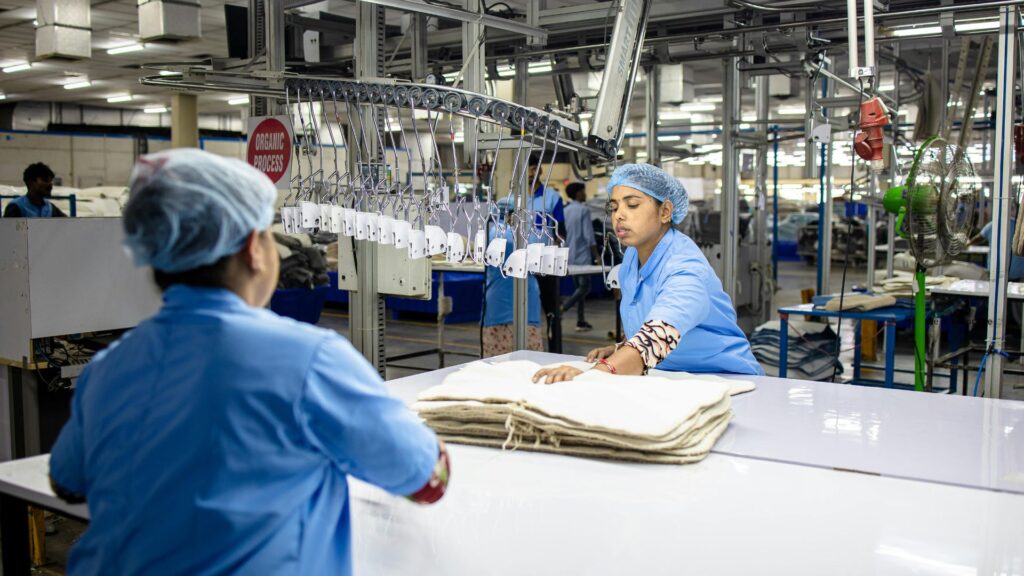
For many B2B manufacturers, particularly those that established their market presence before the digital era, there comes a point where the brand is no longer keeping pace with the business. And when that happens, the consequence is not immediately visible — but it compounds quietly, like rust.
Signs Your Brand Needs a Refresh
- Your website was last updated more than three years ago and doesn’t render well on mobile.
- Your social media pages are either absent, inconsistent, or have not been posted on in months.
- Your brand communication reads like it was written for a different decade — even if the products are world-class.
- Your competitors — some newer, some with inferior products — are getting inquiries you should be getting.
- Prospective hires and clients tell you they ‘couldn’t find much’ about you online before your first meeting.
Rebranding is Not Starting Over
One of the most common hesitations B2B manufacturers have about rebranding is the fear of losing legacy equity — the recognition that comes from decades of operation. This fear is valid, but it conflates rebranding with erasure.
Rebranding, done correctly, is about updating the expression of your brand — its visual identity, its communication language, its digital presence — while preserving and even amplifying the substance beneath. A 40-year-old engineering company does not need to pretend it was founded last year. It needs to communicate its four decades of accumulated expertise in a way that resonates with the buyers of today.
In practice, this means:
- Refreshing the website with a modern UI/UX that reflects the current standard of your industry.
- Updating visual identity elements (logo, typography, colour palette) to feel contemporary without losing recognisability.
- Rebuilding the content strategy around today’s buyer journey — including AI-discoverable, structured content.
- Re-establishing social and digital presence with a consistent, well-maintained editorial calendar.
- Aligning all brand communication — from proposals to email signatures to trade show materials — under a coherent new framework.
The business case is not abstract. In an age where even an offline-first approach business starts its buyer journey online, a brand that doesn’t show up well in digital search — whether on Google, on LinkedIn, or through an AI assistant query — is leaving revenue on the table every single day.
Your Brand Is Not a Line Item — It Is a Balance Sheet Asset
The most successful B2B manufacturing companies in the world — whether they are global corporations or respected regional specialists in contract manufacturing — have one thing in common: they treat their brand as a strategic business asset, not a design exercise.
For manufacturers still operating with an ‘our products speak for themselves’ philosophy, the market is sending a clear message: your products need a voice. That voice is your brand.
Whether you are building from scratch, refreshing a legacy identity, or finally connecting your digital presence to your real-world excellence — the investment you make in brand-centric marketing today will compound into the most durable competitive advantage your business has.
Because in the end, the business that gets remembered, trusted, and recommended is not always the one with the best product. It is the one that made its excellence visible.
Frequently Asked Questions (FAQs)
Why do B2B manufacturing companies need branding if they rely on direct sales and referrals?
Even in referral-heavy businesses, brand strength determines how often and how confidently you are referred. A well-branded manufacturer gets mentioned by name; an unbranded one gets described vaguely as ‘some company I used once.’ As buyer journeys increasingly start online, brand presence also ensures that referrals convert — because the prospect finds consistent, credible information when they look you up.
How is B2B manufacturing branding different from consumer (B2C) branding?
B2C branding focuses on emotional resonance and lifestyle aspiration. B2B manufacturing branding must balance both emotional trust (reliability, partnership, long-term relationship) and rational proof (certifications, technical competence, industry experience). The buying committee in B2B is multi-stakeholder, and the brand must speak credibly to engineers, procurement professionals, finance heads, and business owners simultaneously.
What is the ROI of investing in branding for a manufacturing company?
Quantifiable returns from brand investment in B2B manufacturing typically include: reduced sales cycle length (buyers arrive pre-qualified and pre-convinced), improved win rates on new business pitches, higher client retention and reduced churn, better talent attraction and retention, and pricing power — branded suppliers routinely command higher margins than commodity suppliers.
Should a manufacturing company maintain separate brands for different product lines?
This depends on how different the target segments and buyer personas are. If your product lines serve very different industries with different buying criteria and risk profiles, distinct sub-brands reduce confusion and enable precise messaging. If the segments overlap significantly, an umbrella brand with vertical-specific communication (dedicated landing pages, case studies, messaging) is usually more efficient and leverages the parent brand’s equity.
How do AI tools like ChatGPT and Perplexity affect B2B manufacturing brand visibility?
AI tools increasingly serve as the first point of discovery for buyers researching vendors and solutions. If your brand has a strong, structured, content-rich digital presence — well-maintained website, active LinkedIn, published case studies, trade media mentions — it is more likely to surface in AI-generated responses. Brands that do not invest in structured digital content become invisible to AI-powered discovery, which is rapidly becoming a significant portion of the B2B research journey.
What is the biggest brand mistake B2B manufacturers make?
The most common and costly mistake is treating brand as a one-time project rather than an ongoing business process. Many manufacturers invest in a website redesign or a new logo, then leave it unchanged for five or more years while the market, competitors, and buyer expectations evolve around them. Brand is a living, breathing expression of your business — it requires consistent maintenance, investment, and evolution.
How long does it take to see results from brand investment?
Early indicators — improved web traffic, better-quality inbound inquiries, stronger prospect engagement — often appear within three to six months of a consistent brand-centric strategy. Deeper commercial outcomes — shorter sales cycles, improved win rates, stronger referral velocity — typically compound over 12 to 24 months. Brand is a long-term investment with compounding returns; the earlier you start, the more durable the advantage.
About the Author
This article was developed by a team specialising in digital marketing, brand strategy, and content development for businesses navigating the sustainability communication landscape. The team works with B2B and D2C companies across sectors to translate genuine sustainability commitments into compelling brand narratives — helping them build brand equity, win procurement decisions, attract conscious consumers, and communicate with the credibility that today’s market demands.